Free eye examinations and glasses for children at the Santa Marta Pediatric Dispensary
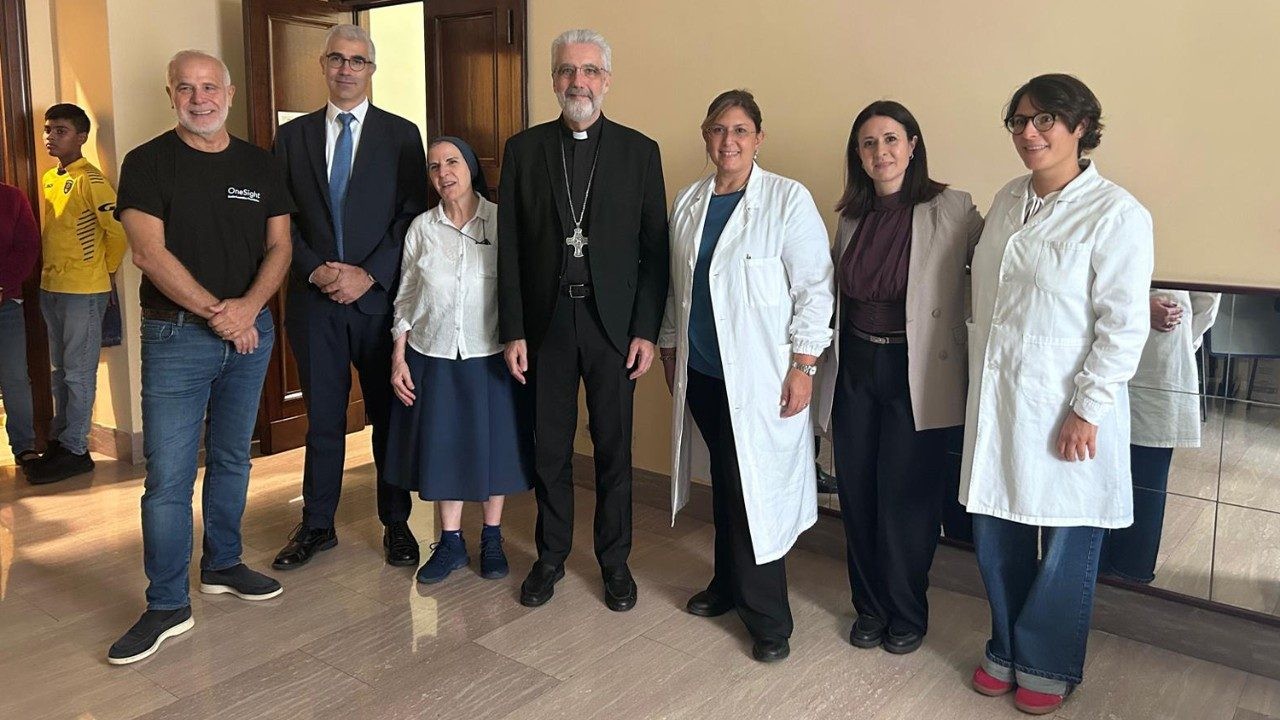
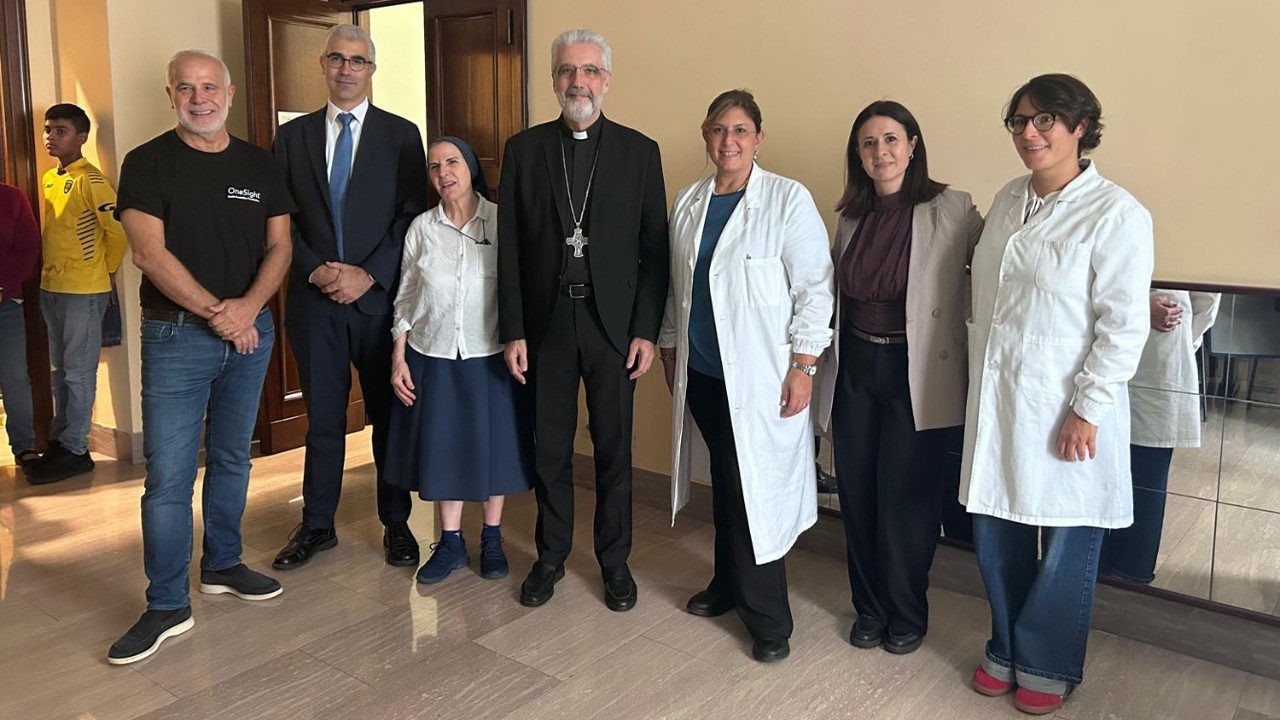
On the occasion of today’s World Sight Day, on 7 and 8 October, around 50 children were able to undergo eye screening at the Pediatric Dispensary. An extraordinary opportunity, underscored by Monsignor Luis Marín de San Martín, Prefect of the Dicastery for the Service of Charity, an expression of concrete charity without borders and a testimony to fruitful cooperation in helping those in need.
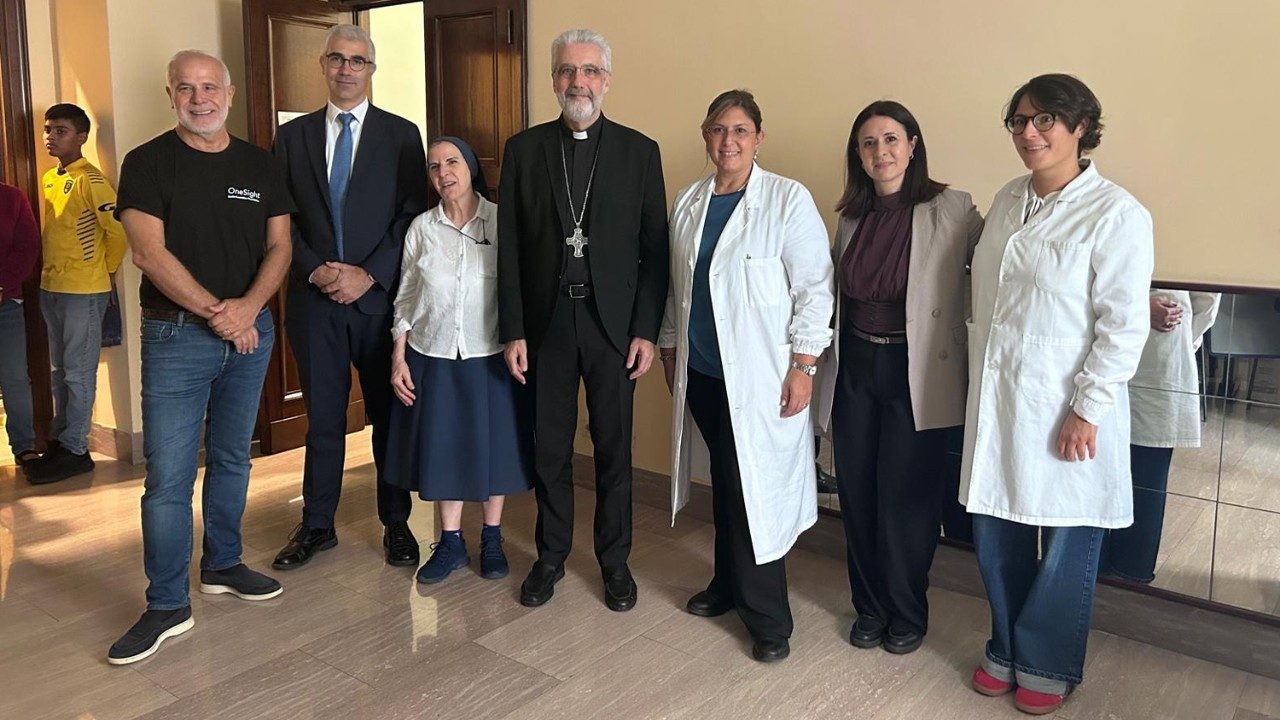
A light-blue sign with white lettering reads “Pediatric Dispensary”, with an arrow pointing to this precious place, just inside Vatican City, which serves around 450 families and where medical care, examinations and specialist assessments are not the only services provided. Here, the person is cared for as a whole: problems are first addressed through listening and, wherever possible, through solutions. And sometimes a solution can come in the form of a pair of lenses, a new pair of glasses donated without asking anything in return. Today, 8 October, is World Sight Day, and since yesterday around 50 children have been able to receive a free eye screening at the Dispensary, coordinated by the Dicastery for the Service of Charity and made possible thanks to the generosity of the OneSight EssilorLuxottica Foundation.
Marín de San Martín: helping children in need
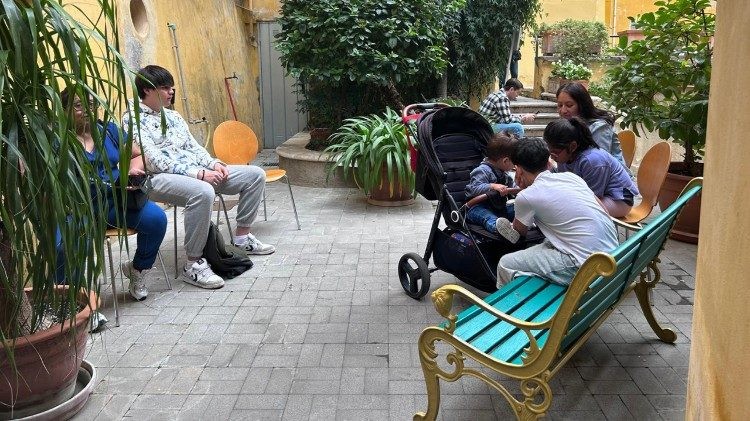
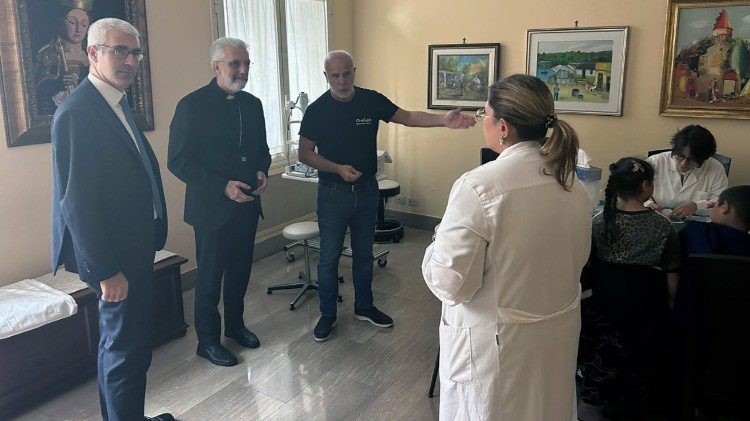
Among the mothers waiting in line with their children, some holding newborns in their arms, and fathers accompanying their children, Almoner Monsignor Luis Marín de San Martín arrives. Prefect of the Dicastery for the Service of Charity and also President of the Santa Marta Dispensary, he greets the children present and asks about the two-day screening programme, “which,” he says, “has extraordinary value”, because it helps many children overcome a difficulty while supporting families who otherwise would not be able to address their children’s needs. “It is a testimony of the Church, of charity, but of practical, concrete and also effective charity. A charity,” Monsignor Marín de San Martín adds, “that does not stop, but rather adapts creatively to changing needs. Here, everyone is welcomed, because charity has no borders.”
“For me, it is a joy to preside over the Dispensary Foundation,” the Almoner explains. “I thank the Lord for allowing me to serve the Church here. Since I was appointed to lead the Dicastery, I can look back on a very positive experience, because I have encountered a wonderful world, the world of charity, which is sometimes not sufficiently known. The Pope’s charity reaches so many people thanks to the ‘saints next door’, as Pope Francis used to say: volunteers who offer their generosity, their professional expertise and their time to those who are most in need. For me, these have been months of great personal, spiritual and pastoral enrichment.”
The Dispensary’s support
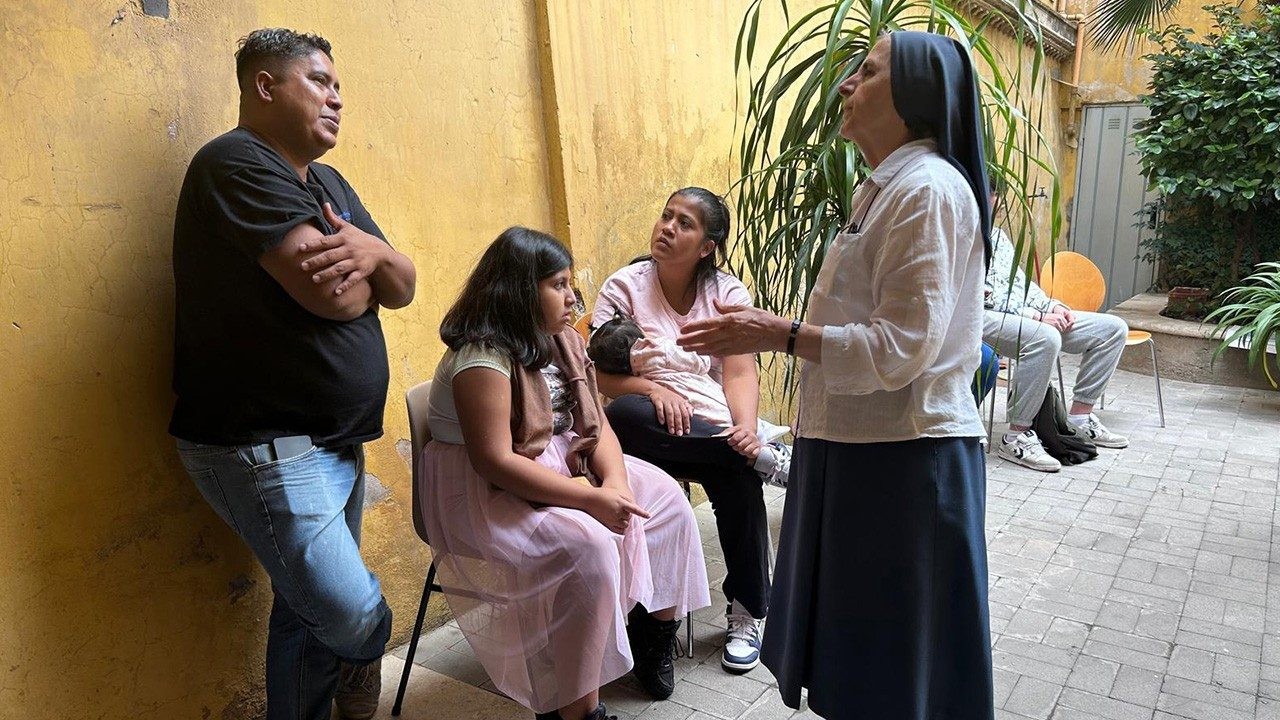
“These are very special days,” says Sister Anna Luisa Rizzello, of the Daughters of Charity of Saint Vincent de Paul, who has been responsible for the Dispensary since 2022. The facility provides consultations both in the morning and afternoon, thanks to around seventy doctors and forty volunteers. Petite in stature, with more than 50 years of consecrated life behind her, and speaking with a Puglian accent blended with a Neapolitan one after spending much of her ministry in Naples, she goes up and down the stairs offering advice and smiles, concerned if a child is too thin or whether those left at home are doing well. “We have had the opportunity to offer this service to our children. It is an additional form of support for families and, above all, for the little ones who need it.” Sister Anna Luisa speaks of changing needs. Many families, in fact, struggle to make ends meet because they lack employment and adequate housing. She does not hide the difficulties that arise from being unable to respond to everyone. “The services are constantly improving, but there are some areas that need to be strengthened, such as speech therapy and psychomotor therapy.” “We ask for help from these professionals,” she continues, “because many children need it, either because they speak two languages or because they have only recently arrived in Italy.”
Glasses to open up new possibilities
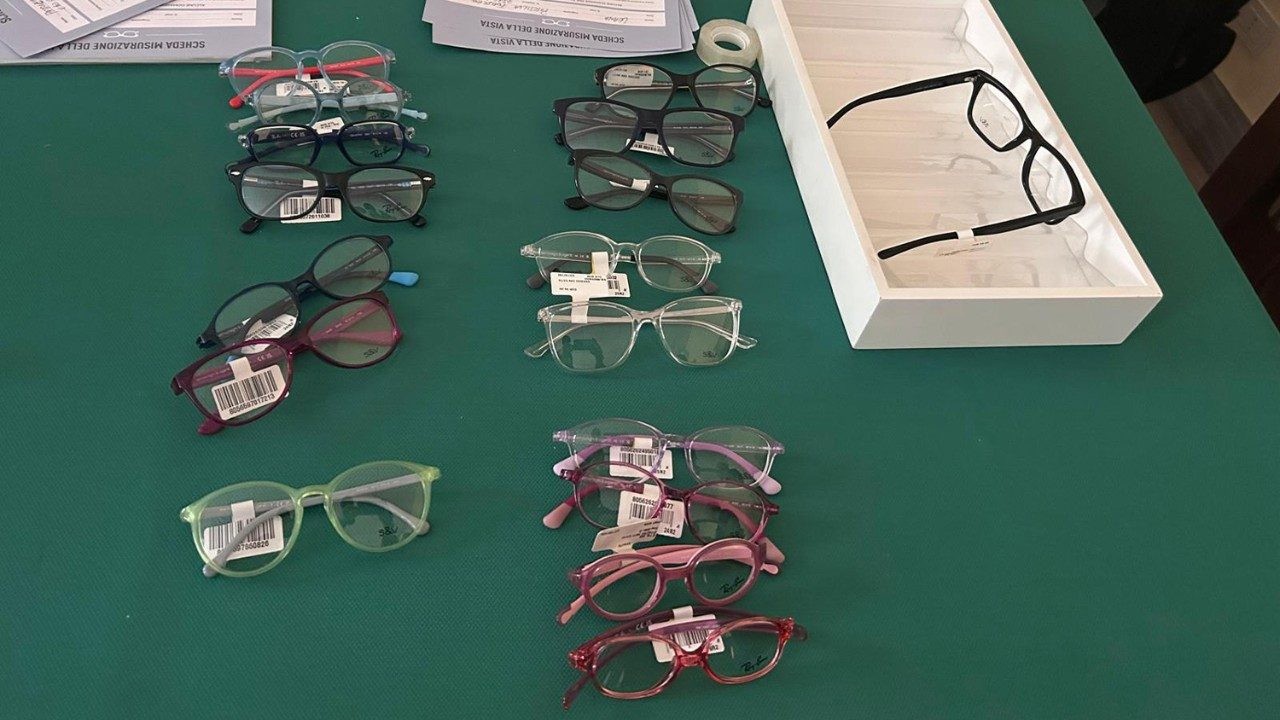
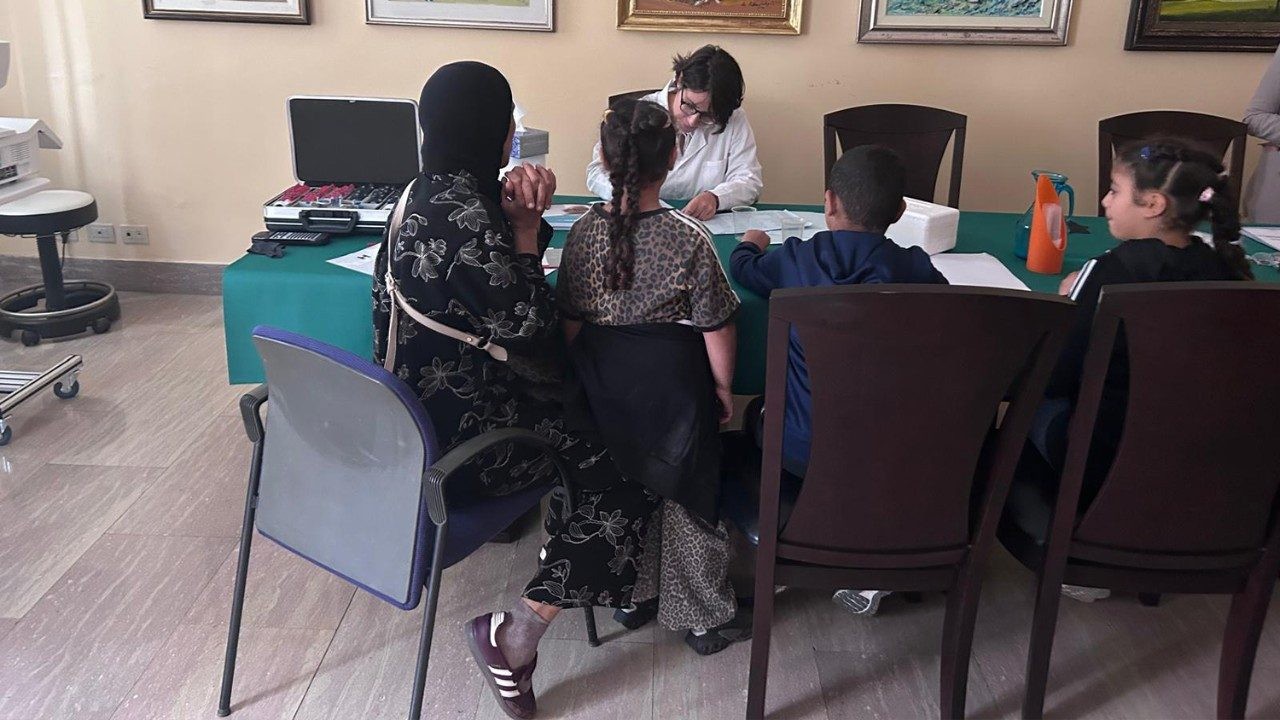
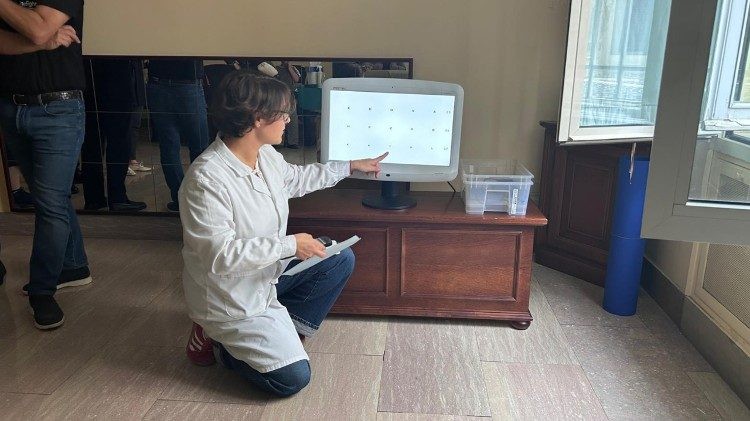
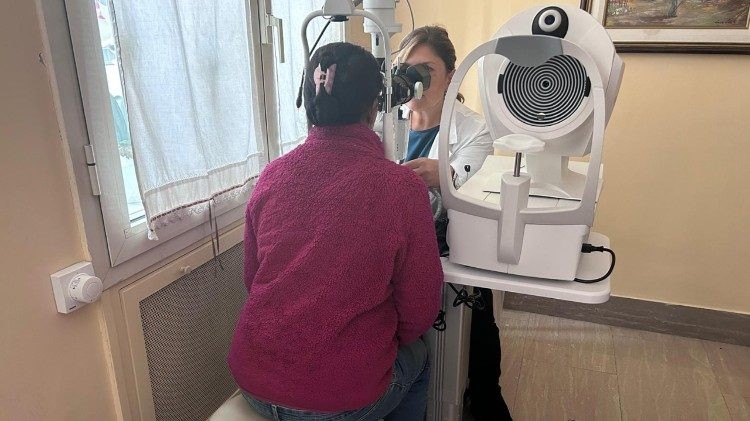
In a room equipped for eye examinations, two female doctors are busy examining the children. On the table where their instruments are placed are also several pairs of glasses intended for the little ones; beside them are notebooks, a Frozen album for the girls and sunglasses: gifts they have earned after spending the morning waiting for their turn. Andrea Rendina, Secretary General of the OneSight EssilorLuxottica Foundation, speaks on behalf of the organisation and says he is honoured by “the privilege of collaborating with the Holy See and being able to offer eye examinations and prescription glasses to children”. “We are very pleased to be here, and we are indeed seeing how useful this is, because further assessments will be necessary for certain eye conditions that we have identified.” This is a first experience, although the Foundation has already been working since 2023 with the Madre di Misericordia outpatient clinic, a facility of the Dicastery for the Service of Charity providing healthcare assistance to people in need in St Peter’s Square. “For us, addressing the vision of the most vulnerable is not simply a medical act,” Rendina explains. “It is an operation in the name of equity, because eyesight is also a social issue. If I cannot see well, I cannot study well or work well, and therefore I am disadvantaged. We remove this obstacle precisely so that people can fulfil their potential and have a better life.”
Mothers are examined too
Among the volunteer doctors is Dr Valeria Pendino of the Bietti Foundation, a leading reference point for ophthalmology in Italy and an organisation that has long been involved in social initiatives. “We are very sensitive to the problems faced by disadvantaged families,” she explains. “We work with associations that support them, and this is how this opportunity came about. I am happy to have found the time to be here today. For me, the experience has a strong impact because I realise that, in our field, prevention is essential. Today I saw older children, but also young adults who, if they had been diagnosed and treated during childhood, would have had a different course. We examined children with psychomotor delays, often involving speech, children who had not undergone their scheduled eye examinations and who have visual defects that have hindered the development of one or both eyes. So now there is a path to follow. And then there are mothers with conditions that are clearly diagnosable and treatable during childhood, but who do not know that they have them. And so,” Dr Pendino concludes, “we are often powerless and unable to provide a solution.”
The embrace of the Dispensary
There is no sense of resignation at the Dispensary. Perhaps it is the liveliness of the children, or the determination of the mothers who, despite travelling across the city by bus, know that their children will be welcomed here. Asma has arrived with her three children, two girls and a boy: “They are always with me,” she says. She has known the Dispensary for almost nine years. She received help when her children were very young, including milk and baby food, and it has now become a point of reference for her. “They are very good to us foreigners,” she explains. She arrived from Tunisia thirteen years ago and now works as a caregiver three times a week. “My husband and I both have residence permits, we have a home and work, and we always thank God!”
Ashan speaks excellent Italian. He is originally from Sri Lanka, works as a musician, sings and also finds work as a sound engineer. He is accompanied by his daughter Viola Miriam, who is wearing a pair of pink glasses. He first came to know the Dispensary eight years ago. “We always come here for our check-ups, and we also took part in some very beautiful celebrations with Pope Francis.”
People come with a problem and leave reassured, or at least with the feeling that they are not alone; there is no more beautiful gift for those who have experienced loneliness in a foreign country or the pain of struggling to make ends meet than to find an outstretched hand that asks nothing in return. It is a generous service which, as Pope Leo has explained in the past, makes visible and concrete “the universal dimension of the Church”, “bearing witness to the Gospel of peace in a world very often marked by division and suffering.”